Get free quotes from specimen courier service near you
Takes about a minute. Free, no obligation; providers reply to you directly.
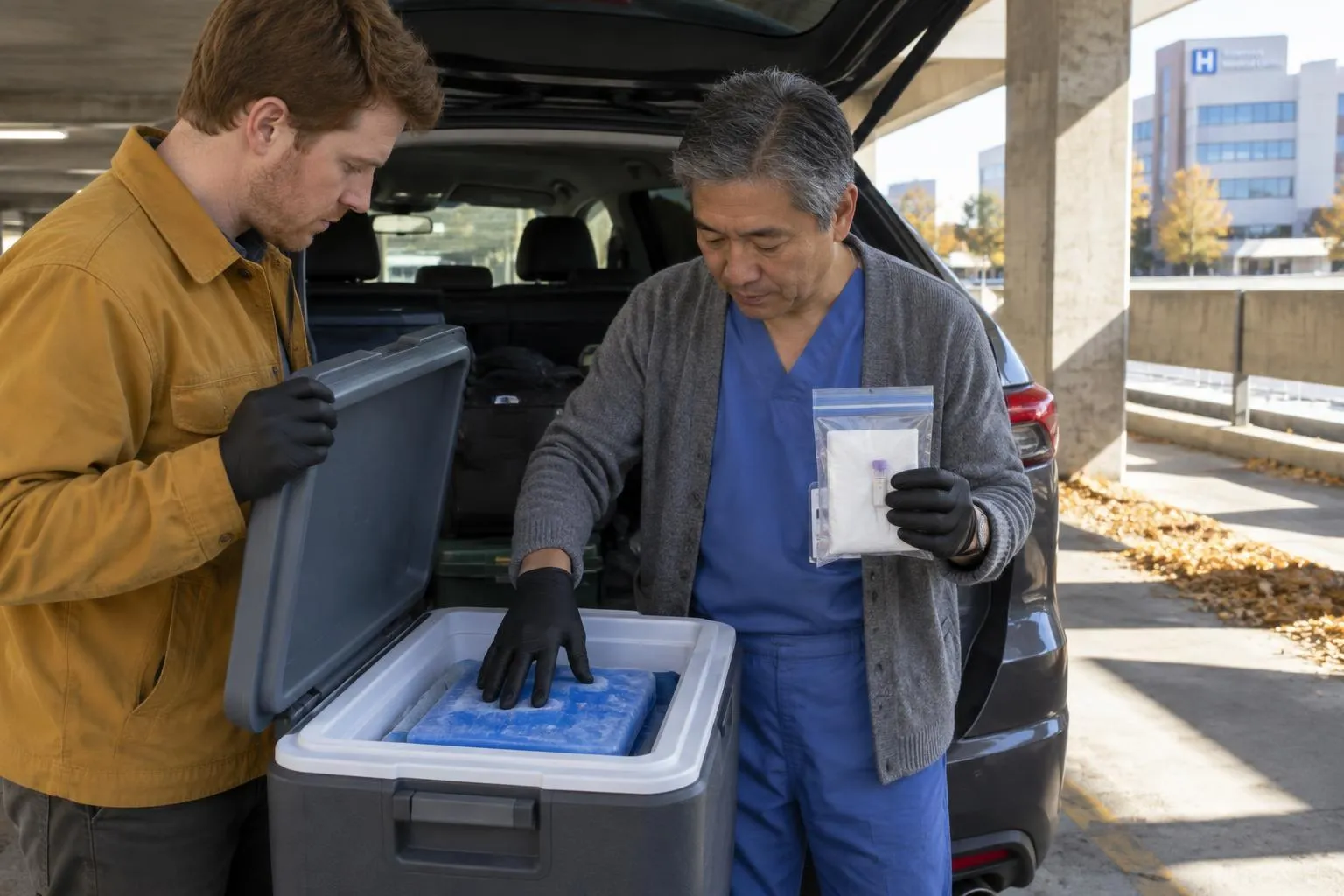
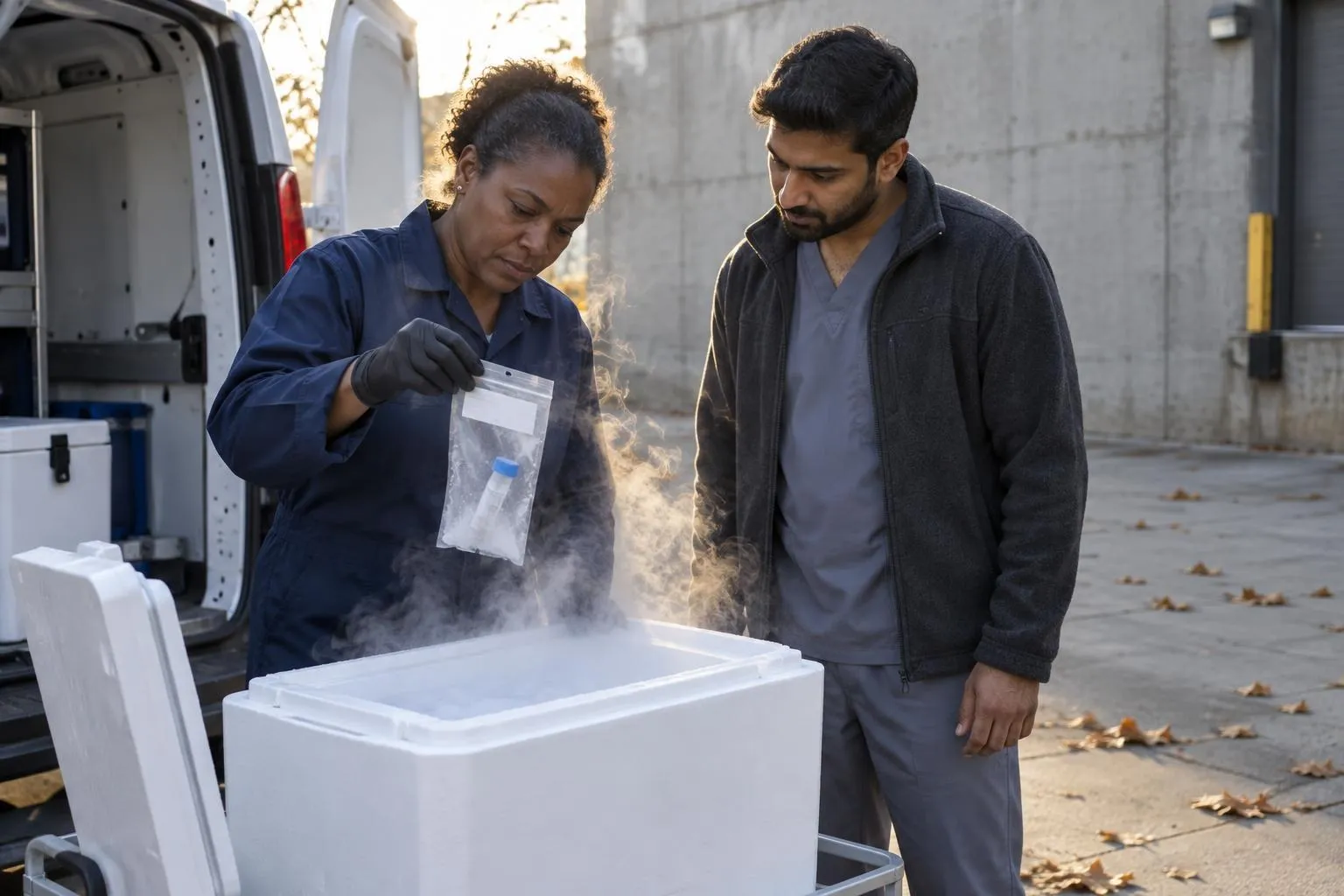
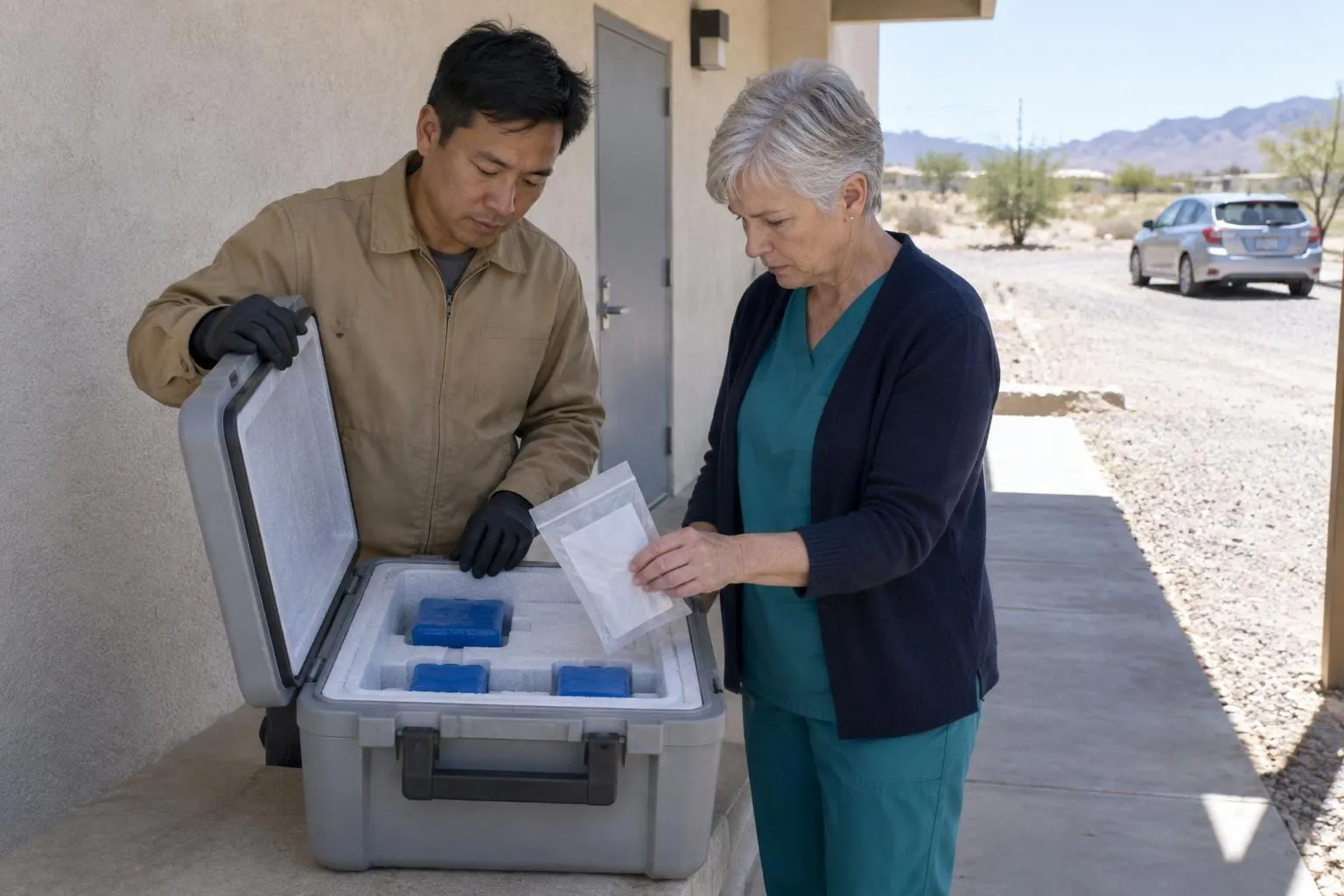
The first time I handed off a cryogenic tissue sample to a courier who showed up in an unmarked Honda Civic with a cooler from Walmart, I told myself it was probably fine. It wasn’t. The sample arrived eight hours late, out of range, and unusable. The patient had to come back in. Nobody ever talks about the cost of that.
The Short Version:Most specimen courier selection fails happen before the first shipment — because buyers optimize for price or convenience instead of compliance and chain-of-custody rigor. If a courier can’t prove HIPAA training, temperature control, and a documented on-time track record, walk away.
Key Takeaways:
- Regulatory exposure (HIPAA, DOT, OSHA) follows you, not the courier, if something goes wrong
- Temperature control and chain-of-custody documentation are non-negotiable, not upsells
- Certified couriers cost more upfront and save significantly more on recollections and delays
- The questions you ask during vetting matter more than any contract clause
The Villain Nobody Names
Here’s what most courier selection guides skip entirely: the risk isn’t usually a catastrophic spill. It’s the slow bleed — a sample that arrives two degrees out of range, a handoff with no documented chain of custody, a driver who doesn’t know that the biohazard bag isn’t just for aesthetics. These failures don’t announce themselves. They show up as invalid test results, recollection requests, and compliance audit findings that trace back to your logistics vendor.
The industry has a polite euphemism for this: “sample compromise.” The less polite version is: your patient’s diagnosis got delayed because someone treated a Category B biological substance like an Amazon return.
Reality Check:Specimen stability windows are often measured in hours, not days. Same-day transport isn’t a premium service tier — for many specimen types, it’s the minimum viable standard.
Certified vs. Uncertified: What the Gap Actually Looks Like
| Factor | Certified Courier | Uncertified/General Courier |
|---|---|---|
| HIPAA compliance | Documented training + periodic recertification | Often absent or self-reported |
| DOT/PHMSA biohazard handling | Driver-certified, UN 3373 packaging | Standard parcel handling |
| Temperature control | Refrigerated, frozen, ambient — vehicle-equipped | Passive cooler at best |
| Chain of custody | Every handoff documented | None standard |
| STAT/after-hours capability | Built into service tiers | Ad hoc, unreliable |
| CAP/CLIA audit readiness | Documentation exists | Documentation doesn’t exist |
The gap at the bottom of that table is where labs get hurt during accreditation audits. CAP and CLIA reviewers don’t accept “we think the courier was careful” as documentation.
The 7 Questions That Actually Filter Out Bad Providers
Forget the brochure. Ask these directly, and listen for hedging.
- Do you regularly transport medical and laboratory specimens — not just occasionally? You want a “yes, it’s a significant portion of our volume” not “we’ve done it a few times.”
- What specific compliance procedures do you follow for HIPAA, DOT, and OSHA? They should name specifics without prompting. Vague answers about “following all regulations” is a red flag.
- Can you document driver training in biohazards, bloodborne pathogens, and formaldehyde safety? Training certificates should be on file and available for your audit records.
- What temperature-controlled options do you offer, and how do you verify in-transit ranges? Refrigerated and frozen aren’t the same. Ask how they monitor and what happens if a vehicle goes out of range mid-route.
- What does your chain-of-custody documentation look like for a typical pickup? Ask to see a sample manifest. If they can’t produce one in 60 seconds, that’s your answer.
- What is your documented on-time delivery rate, and how do you handle delays? Real-time tracking plus an escalation protocol for delays is the baseline. “We usually make it on time” is not a protocol.
- Do you offer STAT pickup and after-hours coverage? Emergencies happen at 11 PM on a Saturday. Know this before you need it.
Pro Tip:Ask question five during a sales call, before any contract discussion. Watch how long it takes them to answer. A provider who handles medical logistics daily has this answer loaded.
The Red Flags That Should End the Conversation
Nobody tells you to trust your gut here, but also to trust the specifics. These are the signals that a provider isn’t built for medical logistics:
- They treat your specimens like parcels. If the intake conversation sounds like scheduling a FedEx pickup, that’s exactly what they’ll do with your samples.
- No temperature-controlled vehicle capacity. “We use insulated bags” is not the same as a refrigerated cargo area with calibrated monitoring.
- Vague or absent HIPAA documentation. Patient information travels with specimens. A HIPAA breach isn’t just a fine — it’s reportable and public.
- No real-time tracking. It’s not 2005. If they can’t tell you where your sample is at any given moment, you’re flying blind.
- Inflexible routing. If they can’t accommodate route changes, new collection sites, or STAT requests without a week’s notice, they’ll fail you at the worst possible moment.
Reality Check:The cheapest courier option typically isn’t cheaper once you account for a single recollection event — the patient return visit, repeat lab processing, and staff time add up fast. Price-driven selection is one of those decisions that looks smart on a spreadsheet until it isn’t.
What Certifications Actually Tell You
Not all credentials are created equal. Here’s what the meaningful ones signal:
HIPAA compliance certification — Means staff have been trained on patient data handling and understand what constitutes a breach. Look for documentation of periodic recertification, not a one-time checkbox.
DOT/PHMSA hazmat training — Required for anyone shipping Category B biological substances. Drivers should be certified, not just supervised by someone who is.
CAP/CLIA-compatible documentation practices — This isn’t a courier certification per se, but a courier who understands what these audits require will keep the documentation that makes your life easier. Ask explicitly.
UN 3373 packaging compliance — The international standard for Category B biological substances. If they don’t know this term, stop the call.
For a deeper look at how this fits into a full logistics program, see The Complete Guide to Medical Specimen Couriers.
Practical Bottom Line
You’re not buying delivery — you’re buying documented chain of custody, regulatory insulation, and specimen integrity. Treat the selection process accordingly.
Your next steps:
- Pull your current courier’s HIPAA documentation and driver training records. If you don’t have them on file, request them this week.
- Run the seven questions above against any new provider before a contract conversation.
- For any specimen type with a tight stability window, verify temperature control in writing — vehicle specs, not just packaging claims.
- Build STAT and after-hours coverage into your baseline requirements, not as a premium add-on.
The courier who shows up reliably at 6 AM with proper packaging, documented credentials, and a tracking link isn’t hard to find. They’re just harder to find than the one who quoted you $40 less per run. The difference between them is the difference between a smooth CAP audit and a very uncomfortable conversation with your lab director.
Done reading? Get quotes from medical specimen couriers near you.
Takes about a minute. Free, no obligation; providers reply to you directly.
Popular cities:
Nick built this directory to help lab managers and hospital procurement teams find credentialed specimen couriers without relying on word-of-mouth — a gap he discovered after a reference lab lost a critical oncology biopsy due to an uncertified transport vendor with no documented chain of custody.