Get free quotes from specimen courier service near you
Takes about a minute. Free, no obligation; providers reply to you directly.
A lab coordinator I know lost a $10,000 biologic last year. The courier was $8 cheaper per pickup.
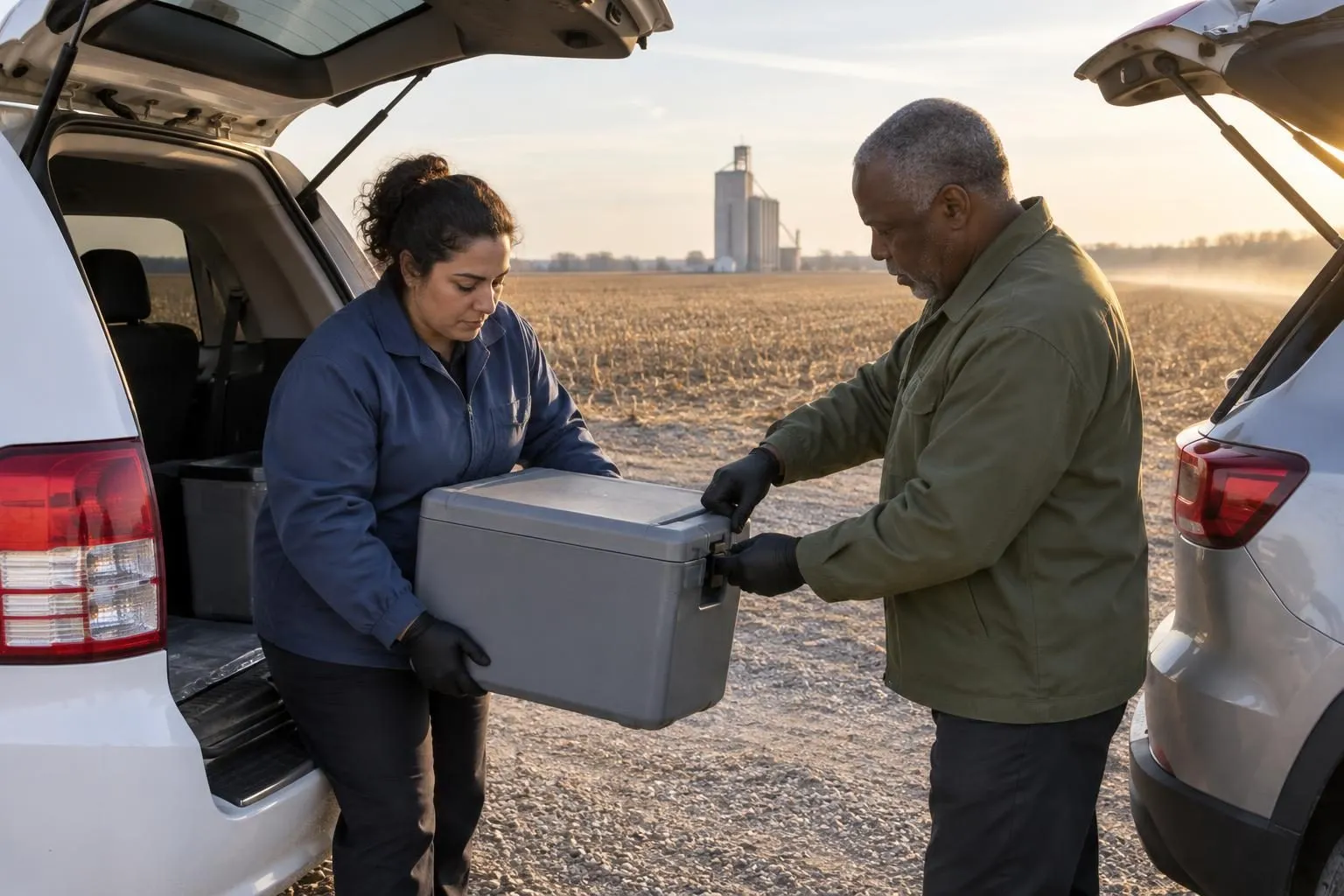
She’d switched to a budget service four months earlier — same route, better rate, “probably fine.” Then one morning a frozen biologic sample didn’t show. No tracking update, no call, no chain-of-custody record. Just gone. The specimen was irreplaceable. The patient had to be re-referred. The lab ate the downstream costs and spent two weeks on incident documentation.
That’s the hidden math of cheap medical specimen couriers nobody puts in their rate sheet.
The Short Version:Budget couriers are fine for non-time-sensitive, ambient-temperature samples where the cost of a failed delivery is just a redraw. For anything temperature-sensitive, STAT, or high-value — biologics, cultures, frozen specimens — the “savings” evaporate the first time something goes wrong. And it will go wrong.
Key Takeaways
- Standard same-day medical courier rates run $30–$45; STAT deliveries run $90–$160+. The gap between “cheap” and “quality” is often $5–$15 per pickup — not the savings people imagine.
- Lost or compromised specimens trigger redraws, patient callbacks, and compliance documentation that cost far more than the courier differential.
- National providers with standardized SOPs typically deliver lower total annual cost than cheap local services, even at higher per-delivery rates.
- Compliance risk (HIPAA chain-of-custody, DOT/PHMSA for biohazardous materials) doesn’t care about your courier’s price point.
What “Cheap” Actually Buys You
Here’s what most people miss when they’re comparing courier quotes: the rate on the invoice is not the cost of the service.
A courier that’s $12 cheaper per pickup but fails on temperature control once a month costs you in redraws, incident reports, patient experience, and — eventually — a CAP or CLIA audit finding. Labs operating under CLIA compliance are required to document chain-of-custody. If your courier doesn’t provide it, you’re the one with the gap.
Budget couriers cut costs somewhere. Usually it’s one of three places: driver training, equipment (no validated temperature-monitoring containers), or staffing (no 24/7 coverage, no escalation path). Any of those three failures will find you eventually.
Reality Check:A “cheap” courier that causes one specimen redraw has already cost you more than a year of the rate difference. Specimen redraws mean patient callbacks, repeated collections, delayed diagnoses, and staff time — none of which show up on the courier invoice.
When Cheap Is Fine (Honest Answer)
I’ll be honest: not every pickup is high-stakes.
If you’re routing ambient-temperature, non-time-sensitive samples — routine urinalysis, certain serology — over a short distance to a reference lab with a generous pre-analytical stability window, a lower-cost local courier may genuinely work. The specimen isn’t going to degrade in a two-hour window. A missed pickup just means same-day rescheduling.
The math changes fast when you add any of these variables:
| Risk Factor | Stakes | Why It Matters |
|---|---|---|
| Temperature-sensitive specimen | High | Even brief excursions invalidate cultures, hormones, certain panels |
| STAT / time-critical | High | Delays cause diagnostic gaps; some tests have 1–2 hour windows |
| High-value biologics | High | Irreplaceable; no redraw option; potential $10K+ loss |
| Long distance / multi-stop | Medium | More failure points; cheap couriers skip escalation protocols |
| After-hours pickup | Medium | Budget services often lack 24/7 coverage |
| Regulatory audit trail required | High | Chain-of-custody gaps become compliance findings |
If your specimens don’t trigger any of those factors, the cheaper option is worth evaluating. If they do, you’re not actually saving money — you’re borrowing against future failures.
The Real Price Comparison
Current market rates for medical specimen couriers in 2026:
| Service Level | Budget Courier | Quality Courier | Notes |
|---|---|---|---|
| Standard same-day | $20–$28 | $30–$45 | Budget skips temp monitoring |
| Rush (2–4 hours) | $30–$45 | $40–$60 | Quality includes escalation path |
| STAT (immediate) | $55–$80 | $90–$160+ | Budget often unavailable off-hours |
| Hidden failure costs | Frequent | Rare | Redraws, lost specimens, compliance |
The delta on a standard pickup is $10–$20. A single specimen redraw — patient callback, re-collection, re-processing — runs $50–$200 in staff time before you count reagents. One lost biologic can hit five figures.
Pro Tip:Ask any courier you’re evaluating for their temperature excursion rate and on-time SLA data. A quality provider can answer both questions immediately. A budget provider usually can’t — because they’re not tracking it.
What Goes Wrong (Specifically)
The failure modes with cheap medical specimen couriers aren’t theoretical.
Temperature drift: A courier using a standard insulated bag instead of a validated container lets a refrigerated sample warm during a longer-than-expected route. The lab receives it within the time window, but the specimen was compromised an hour in. Culture is invalid. Redraw required.
No escalation path: Sample is picked up. Driver has a vehicle issue. There’s no dispatcher, no 24/7 line, no protocol. The specimen sits for three hours. Nobody calls the lab.
Chain-of-custody gaps: Cheap couriers often use paper logs or nothing at all. During a CLIA inspection, the lab can’t produce documented handoff records for the prior six months. Now it’s your problem, not the courier’s.
STAT unavailability: A Friday-night organ transport or emergency blood draw needs immediate pickup. The budget courier doesn’t have weekend STAT coverage. You’re calling around at 10pm.
Nobody tells you this in the rate quote.
What to Actually Evaluate
When you’re comparing medical specimen couriers, price should be about fourth on your list — after:
- Compliance credentials — Are they trained on DOT/PHMSA for Category B biological substances? Do they carry proper documentation for chain-of-custody?
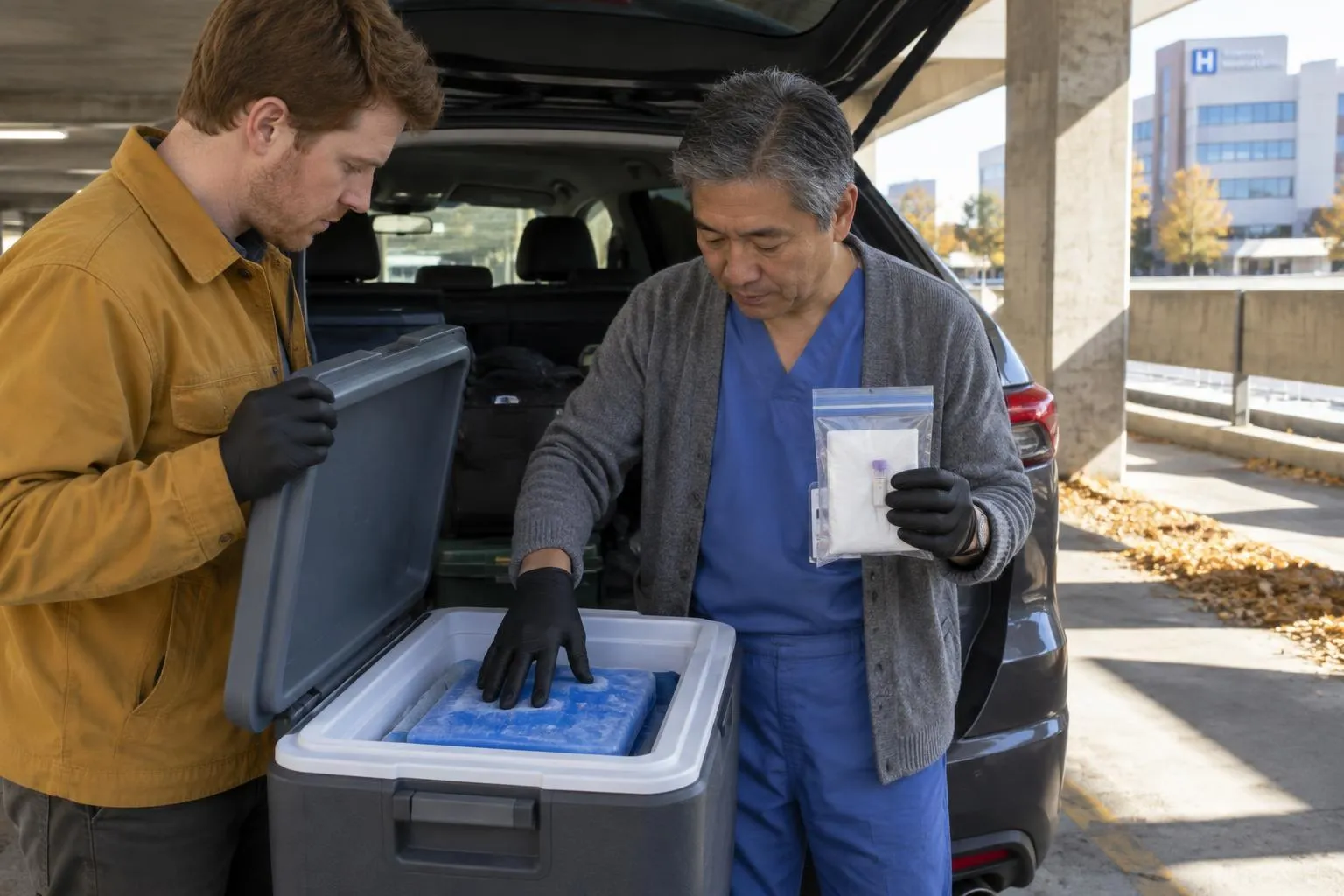
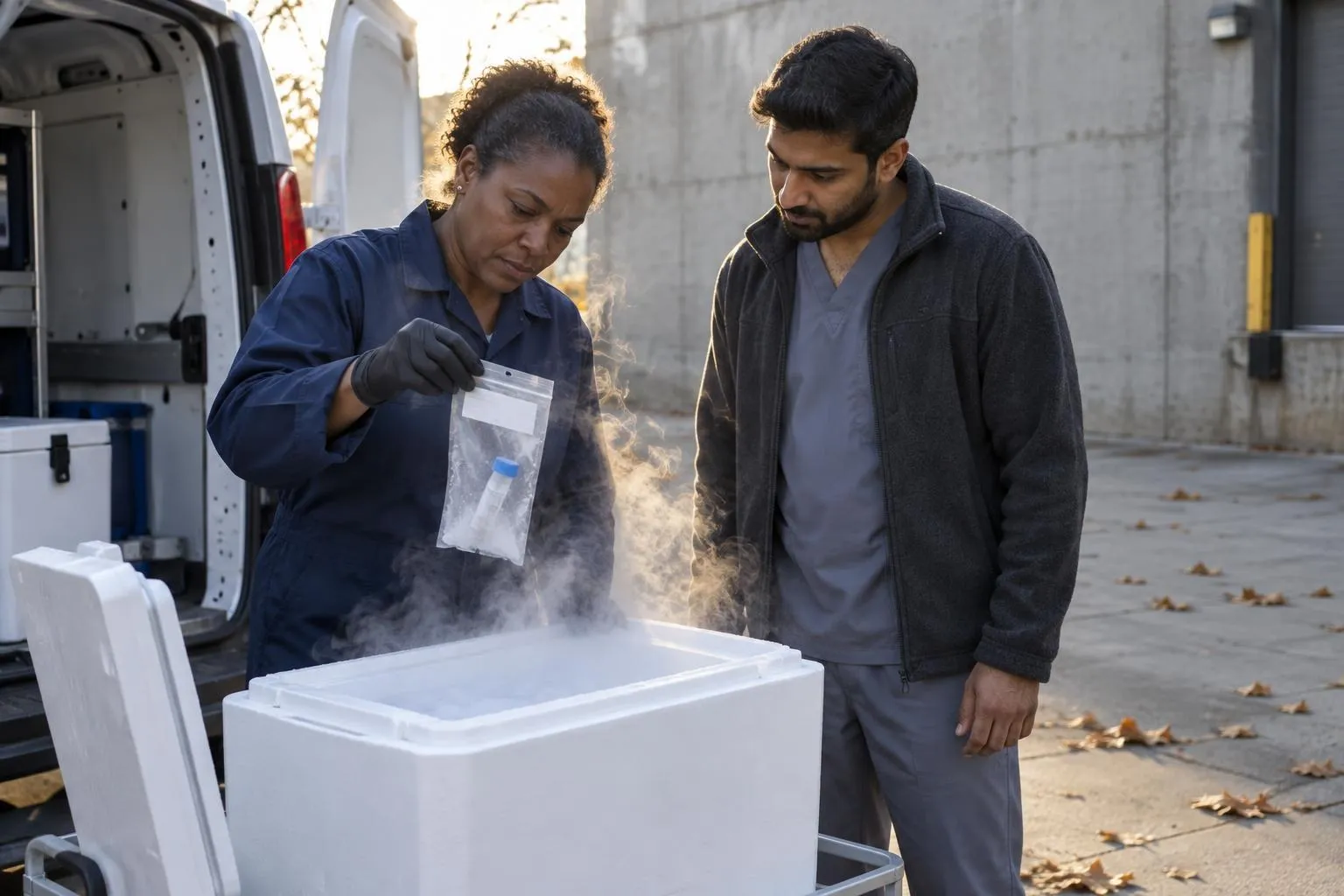
- Temperature control infrastructure — Validated containers with monitoring, not just a cooler and an ice pack.
- On-time SLA data — Get the number. If they don’t track it, that’s your answer.
- 24/7 coverage and escalation — What happens when something goes wrong at 11pm?
For a full breakdown of what credentialed medical specimen couriers actually do and what to look for, see The Complete Guide to Medical Specimen Couriers.
Practical Bottom Line
The labs and hospital networks that outsource specimen transport to quality couriers — even at slightly higher rates — consistently report lower total annual costs than those running budget providers or managing routes in-house. Fewer redraws. Fewer compliance findings. Fewer incidents that turn into RCA meetings.
The $10–$15 you save per pickup disappears the first time something goes wrong. And it will go wrong.
Three steps before your next courier decision:
- Categorize your specimen types by temperature sensitivity and time-criticality. If anything is high-risk, price should not be your primary filter.
- Ask every candidate for their on-time SLA rate, temperature excursion protocol, and after-hours STAT coverage. The answers will do the work for you.
- Calculate your true cost of a failed delivery — redraw, staff time, patient callback, documentation — and compare that against the per-pickup rate differential. The math usually settles the question.
Cheap is only cheap until it isn’t.
Done reading? Get quotes from medical specimen couriers near you.
Takes about a minute. Free, no obligation; providers reply to you directly.
Popular cities:
Nick built this directory to help lab managers and hospital procurement teams find credentialed specimen couriers without relying on word-of-mouth — a gap he discovered after a reference lab lost a critical oncology biopsy due to an uncertified transport vendor with no documented chain of custody.