Are you a medical specimen courier?
RouteStat lists 281 medical specimen couriers. A free listing gives you a profile page and quote requests from people looking for specimen courier service near you, sent straight to your inbox.
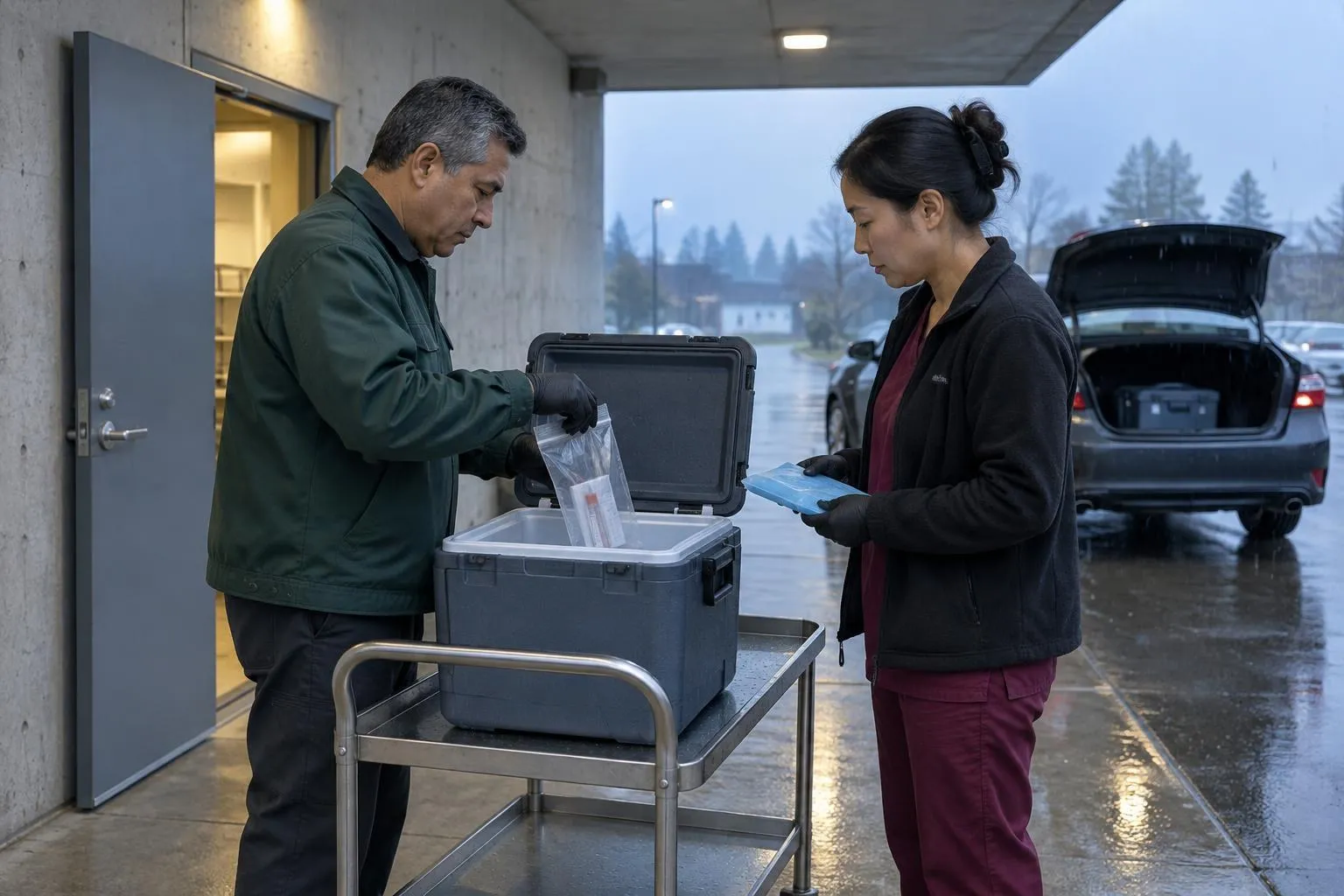
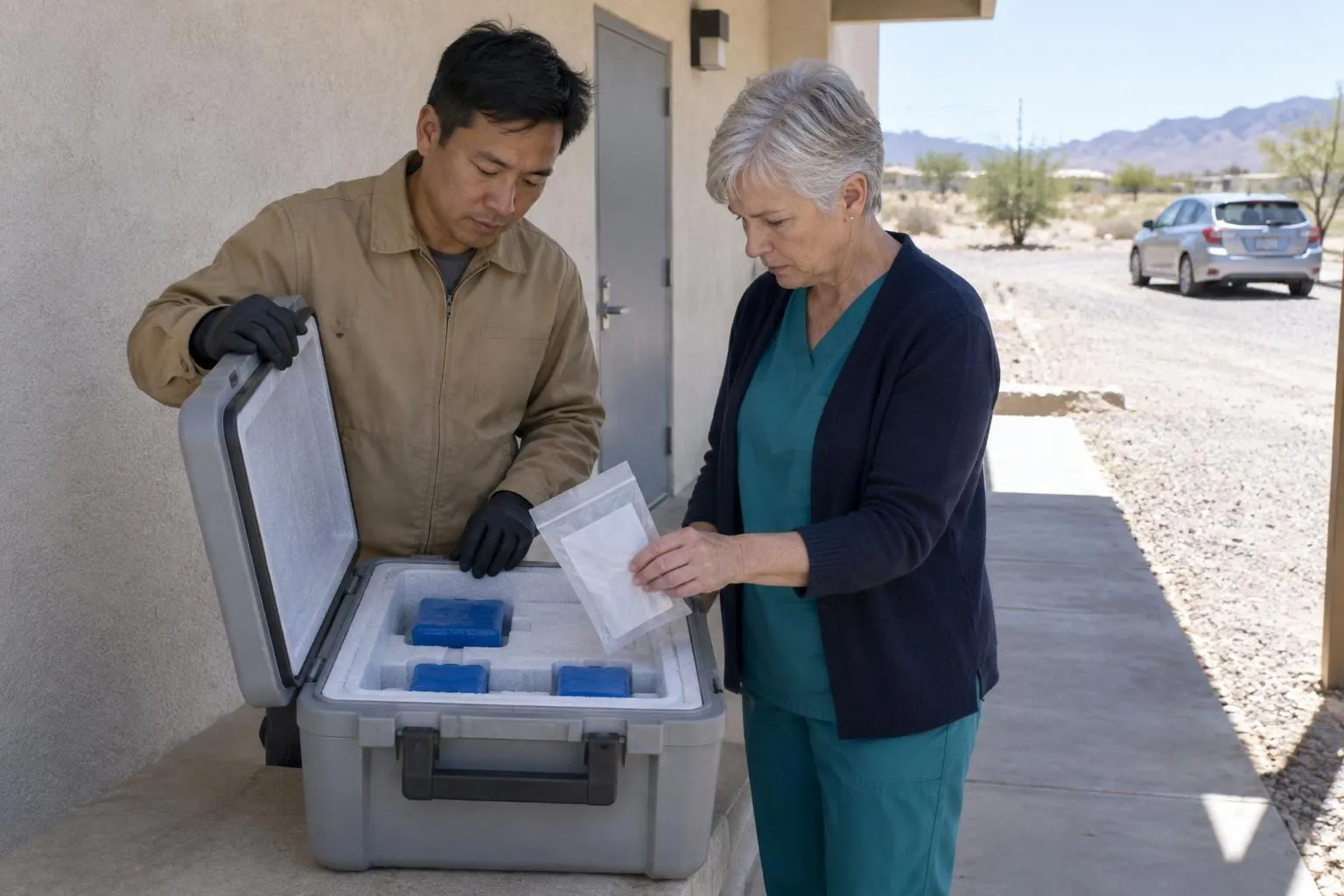
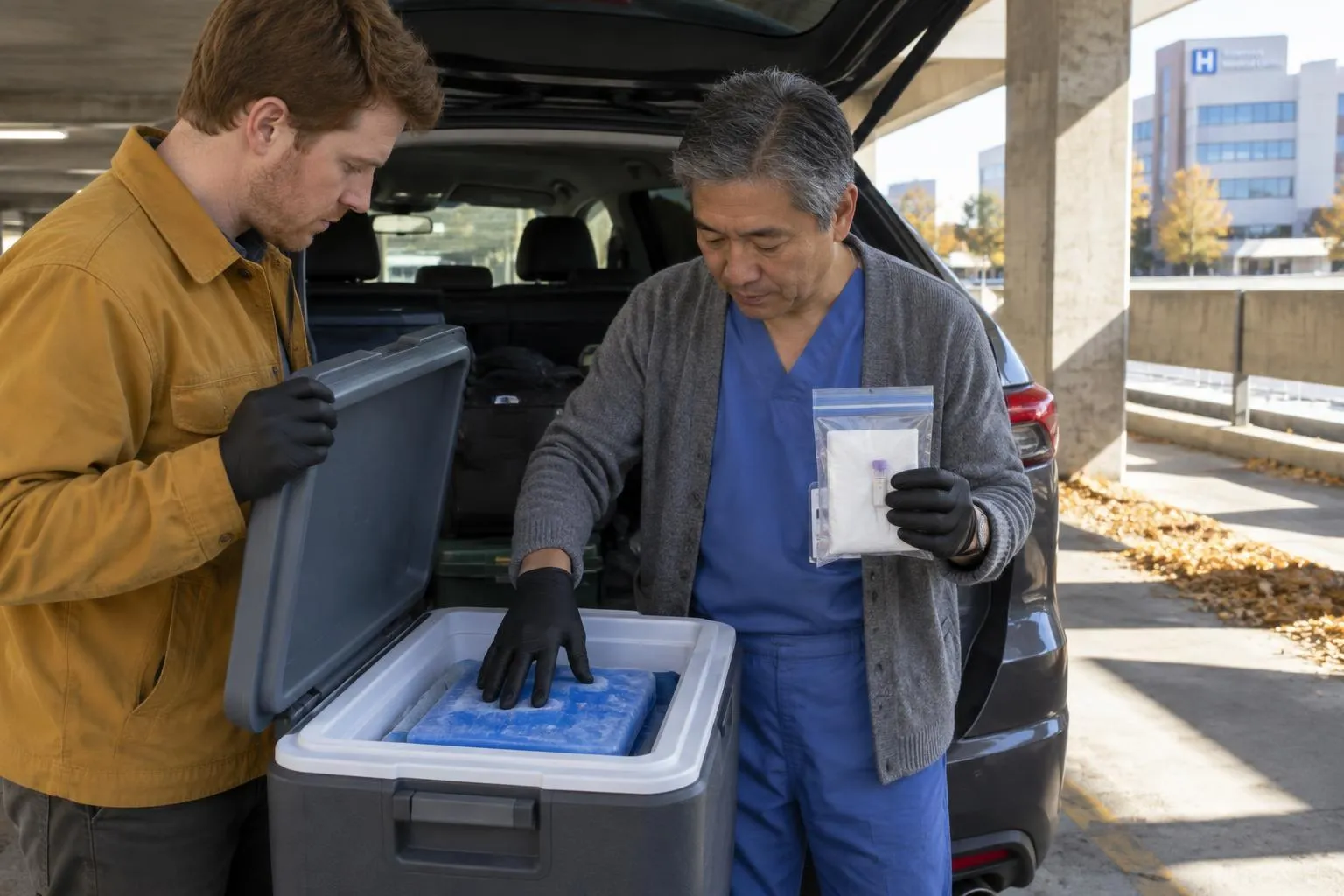
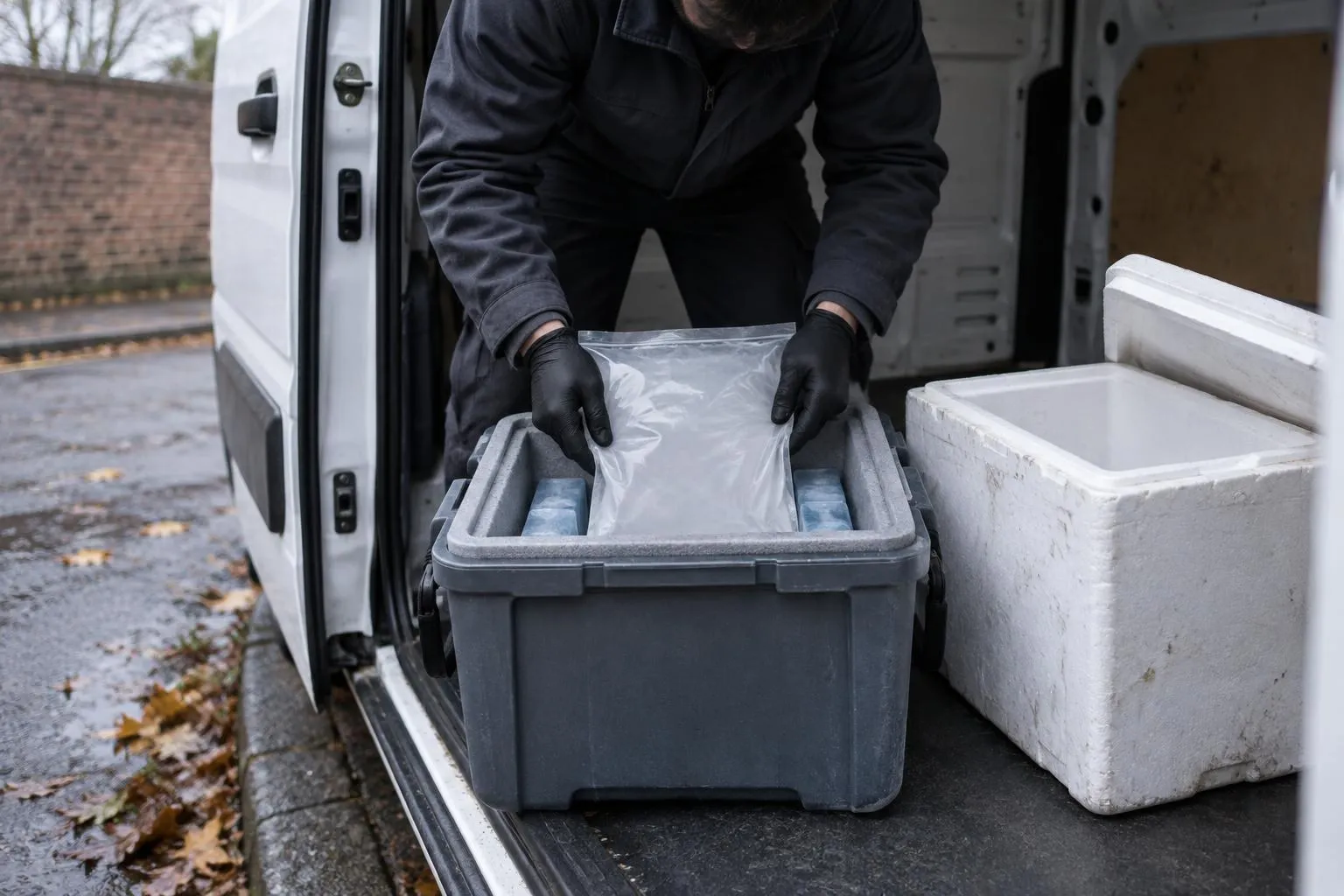
A line I’ve run before many times — when the labs called for an urgent pickup and the courier showed up with a styrofoam cooler from a grocery store. The sample was a biopsy. The cold chain log was a handwritten Post-it note. Nobody got fired, but the specimen had to be recollected from the patient. That’s the industry this market report is actually about.
The Short Version:The global medical courier market hit $6.77 billion in 2024 and is on pace to clear $9 billion by 2029. Domestic routes dominate, hospitals are the anchor customer, and cold chain capability is the dividing line between providers that grow and providers that get replaced. The numbers are big, the compliance bar keeps rising, and the market is nowhere near mature.
Key Takeaways
- The medical courier market grew at 8.21% annually from 2019–2024 — faster than most healthcare subsectors
- Domestic routes account for 81% of revenue; the remaining 19% (international) is growing faster
- Medical supplies and equipment is the largest segment at 46.6% of market share
- Asia Pacific is the fastest-growing region; North America remains the largest
How Big Is This Market, Actually?
The numbers depend on how broadly you define “medical courier,” which is a legitimate source of confusion when comparing reports. Here’s a clean breakdown:
| Market Definition | 2024 Value | Projected Value | CAGR |
|---|---|---|---|
| Medical courier market (narrow) | $6.77B | $8.99B by 2029 | 5.84% |
| Medical courier market (narrow) | $6.77B | $11.79B by 2034 | 5.57% |
| Healthcare courier services (broad) | $48.31B (2026 est.) | $63.68B by 2031 | 5.68% |
| International medical courier only | $4.0B (2023) | $6.5B by 2033 | 4.7% |
The $48 billion figure isn’t a typo — it captures the full healthcare logistics stack including pharmaceutical distribution, medical device freight, and hospital supply chains. The $6.77 billion figure is the more meaningful number for the specimen courier slice: labs, hospitals, clinics, and the couriers that run between them.
Here’s what most people miss: the 2019–2024 growth rate of 8.21% annually was a full two points above the projected forward rate. COVID-era diagnostic demand inflated those years. The market is still growing — just at a more sustainable clip.
Segment Breakdown: Where the Money Actually Is
By Service Type
Medical supplies and equipment is the largest segment at $3.15 billion (46.6%) in 2024, growing at a 6.16% CAGR through 2029. This segment — which includes specimen transport alongside pharmaceutical and device delivery — is also the fastest-growing within the narrow market definition.
Standard delivery services are giving ground to STAT and temperature-controlled options. Volume is still there; margin is not.
By Geography (Domestic vs. International)
| Route Type | 2024 Revenue | 2024 Share | Projected Increment to 2029 |
|---|---|---|---|
| Domestic | $5.5B | 81.3% | +$1.81B |
| International | $1.27B | 18.7% | Growing at 6.07% CAGR |
Domestic dominates because the core use case — hospital system to reference lab, doctor’s office to regional lab, clinic to pathology — is inherently local. The intra-city specimen loop is the backbone of this industry.
International is interesting precisely because it’s harder. Customs navigation, pre-cleared trade lanes for biological samples, IATA compliance for UN 3373 Category B substances — these are real barriers to entry that support premium pricing.
Reality Check:“International growth rate” sounds exciting in a market report, but the international segment is starting from a much smaller base. A 6% CAGR on $1.27 billion is a very different business than a 5.85% CAGR on $5.5 billion.
By End Customer
| Customer Segment | 2024 Revenue | Share | CAGR to 2029 |
|---|---|---|---|
| Hospitals / Clinics | $2.37B | 35.1% | 6.75% |
| Reference Laboratories | Included above | — | — |
| Pharmaceutical / Clinical Trials | Growing segment | — | — |
| Home Healthcare | Emerging | — | — |
Hospitals and clinics are the anchor customer at $2.37 billion — and they’re growing faster than the overall market. Time-critical specimen delivery (STAT pickups, surgical pathology, blood banking) is not discretionary for a hospital. They will pay for reliability.
The pharmaceutical and clinical trials segment is where the growth narrative gets interesting. Every Phase II/III trial that moves to decentralized collection adds specimen courier demand. That’s a structural tailwind, not a trend.
Regional Picture
North America is the largest market. The U.S. DSCSA (Drug Supply Chain Security Act) has pushed traceability requirements deep into the logistics stack — which benefits couriers who built compliant chain-of-custody systems early and punishes those who didn’t.
Asia Pacific is the fastest-growing region across both the narrow and broad market definitions. Medical tourism, expanding diagnostics infrastructure, and a rapidly aging population are doing what they always do: creating specimen volume.
Europe is navigating the EU Falsified Medicines Directive, which has similar traceability implications to DSCSA. End-to-end documentation isn’t optional; it’s table stakes.
Pro Tip:If you’re evaluating a specimen courier’s capabilities, the regional compliance question is the right filter. A courier that can demonstrate DSCSA-compliant chain-of-custody documentation has already cleared a bar that weeds out most competitors.
What’s Driving Growth (and What’s Slowing It)
Structural tailwinds:
- Chronic disease prevalence → more routine diagnostic volume
- Organ transplant programs → time-critical, high-stakes transport
- Home healthcare expansion → decentralized collection that needs pickup infrastructure
- Biologics and cell/gene therapies → cold chain complexity that supports margin
Headwinds that don’t make the press releases:
- Cold chain failures and contamination remain the primary operational risk
- Rural coverage gaps limit expansion into high-need, low-density markets
- Regulatory complexity is accelerating faster than many providers can staff for it
- Customs and documentation costs compress international margin
The contamination and cold chain problem is the villain in this story. Temperature excursions during transport are the number one reason specimens get rejected at the lab. The market has been growing through it, but it’s the reason hospitals vet couriers carefully and why CAP and CLIA compliance documentation matters in procurement decisions.
The Forward View
If the projections hold, this looks like the next five years:
- 2026: ~$7.5–8B (interpolated from 5.84% CAGR on 2024 base)
- 2029: $8.99B (GlobeNewswire/Mordor consensus)
- 2034: $11.79B (10-year projection)
The slower forward CAGR (5.57–5.84% vs. the historical 8.21%) reflects a market normalizing after COVID-era diagnostic demand, not a market contracting. The underlying drivers — aging demographics, clinical trial decentralization, biologics growth — are durable.
Practical Bottom Line
I’ll be honest: market size numbers are most useful as a sanity check, not a decision-making tool. What these statistics actually tell you is:
- This is a legitimate, growing industry — not a niche on its way out
- Cold chain and compliance capability separate the top tier from commodity providers — and the market is pricing that in
- Hospitals and clinics are the stable revenue base; clinical trials and home health are where ambitious operators are building
- North America dominates, but the growth is global — APAC expansion is real
If you’re sourcing a medical specimen courier, the market context matters less than the compliance documentation in front of you. For everything you need to evaluate a provider — credentialing, chain of custody, temperature requirements — start with The Complete Guide to Medical Specimen Couriers.
Done reading? Get quotes from medical specimen couriers near you.
Takes about a minute. Free, no obligation; providers reply to you directly.
Popular cities:
Nick built this directory to help lab managers and hospital procurement teams find credentialed specimen couriers without relying on word-of-mouth — a gap he discovered after a reference lab lost a critical oncology biopsy due to an uncertified transport vendor with no documented chain of custody.