Get free quotes from specimen courier service near you
Takes about a minute. Free, no obligation; providers reply to you directly.
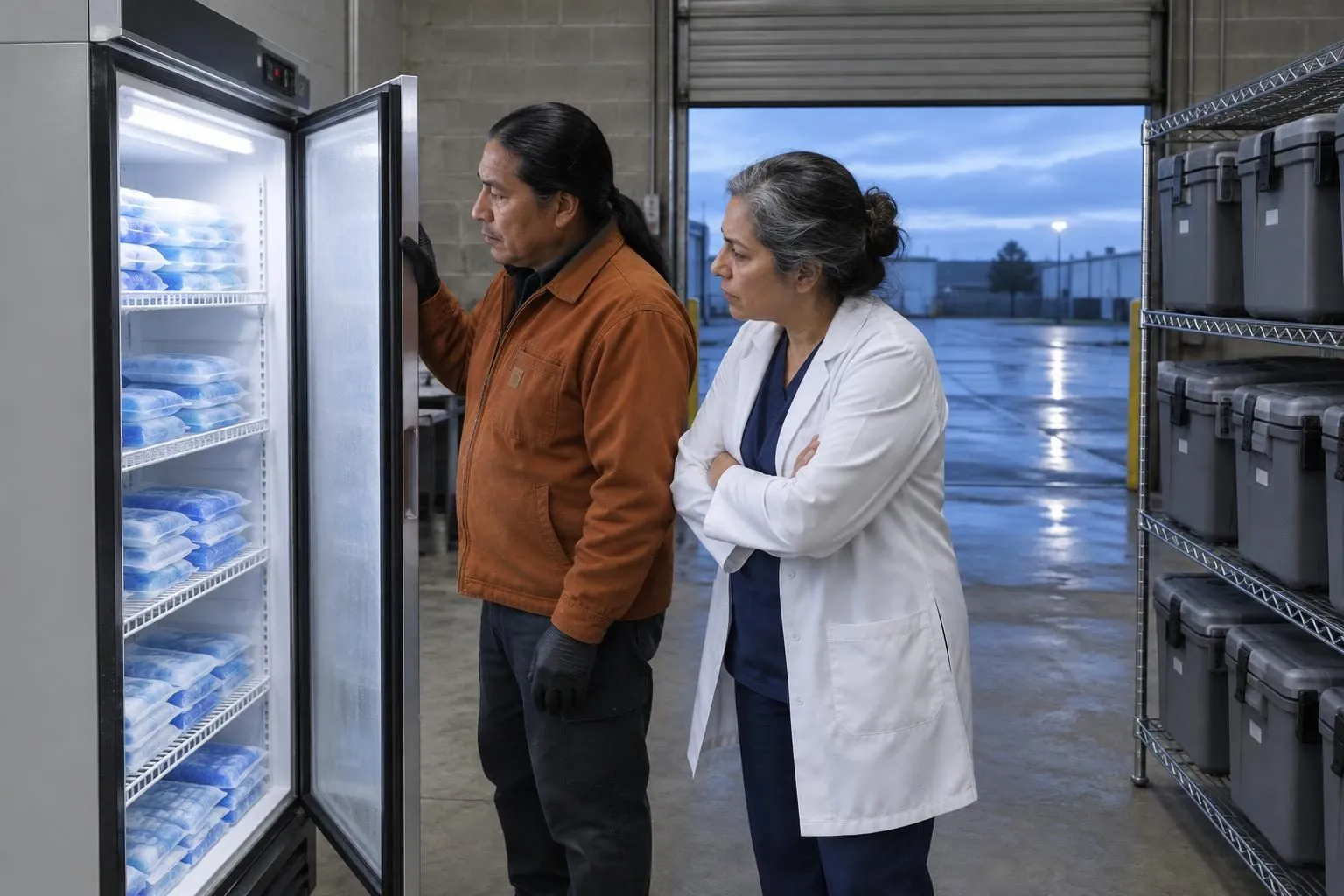
The lab director’s voice was tight when she called. A batch of tissue biopsies — a week’s worth of oncology samples from three clinics — had arrived at the reference lab hours late, outside the acceptable temperature window. Every one of them had to be recollected. The patients had to come back in. Nobody had asked the courier a single hard question before signing the contract.
That story is more common than the industry wants to admit. Hiring a medical specimen courier feels routine until something goes wrong — and when it does, the consequences reach far beyond an invoice dispute.
The Short Version:Most couriers will tell you they’re HIPAA-compliant and reliable. The ones worth hiring will show you documentation, walk you through their temperature protocols, and give you a straight answer about what happens when a driver calls out sick at 5 AM. Ask the 15 questions below and you’ll know the difference in one conversation.
Key Takeaways
- Compliance with HIPAA, OSHA, DOT/PHMSA, and IATA standards (UN 3373 Category B) is non-negotiable — ask for proof, not just assurances
- Temperature control and chain-of-custody documentation are the two places couriers most commonly cut corners
- A good courier has a contingency plan for every failure mode before you even ask
- STAT and after-hours capability matters just as much as daily route reliability
The 15 Questions
1. Are you certified in medical courier practice and medical container handling?
General delivery experience doesn’t transfer to biological specimens. You want staff who hold recognized certifications in medical courier protocols — not just a driver’s license and good intentions. A solid answer names specific credentials and explains when staff recertify.
2. How do you maintain temperature control for ambient, refrigerated, and frozen specimens?
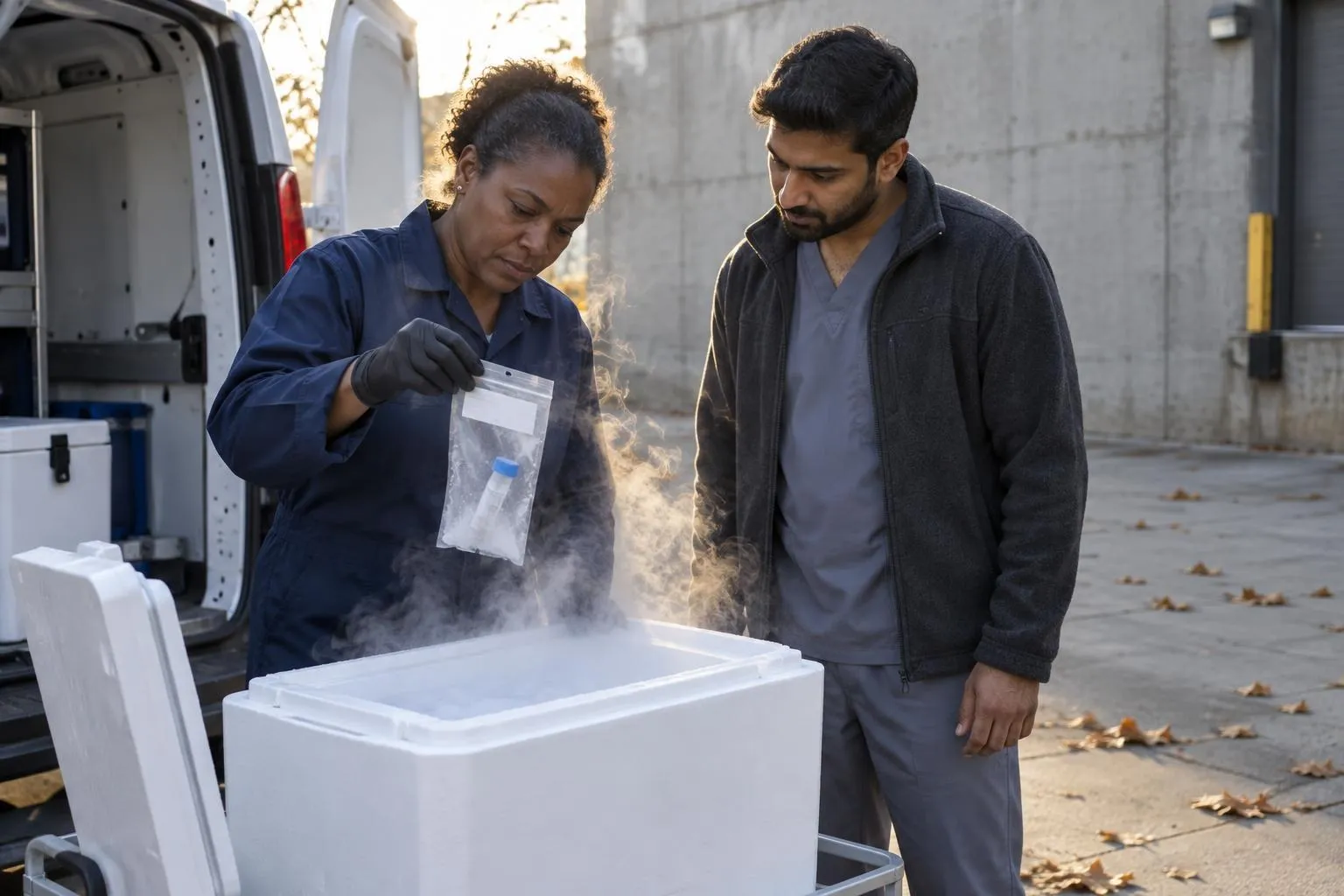
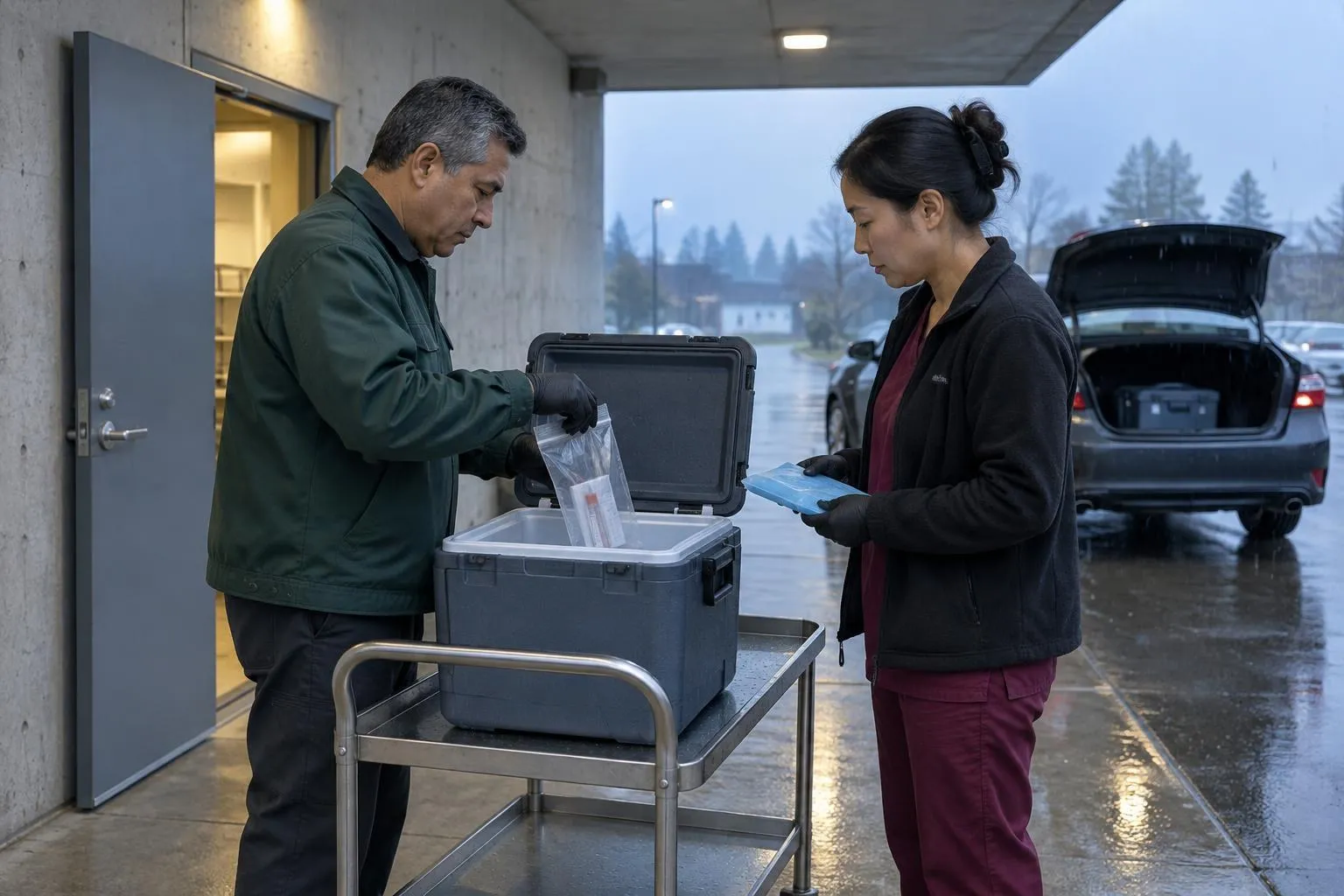
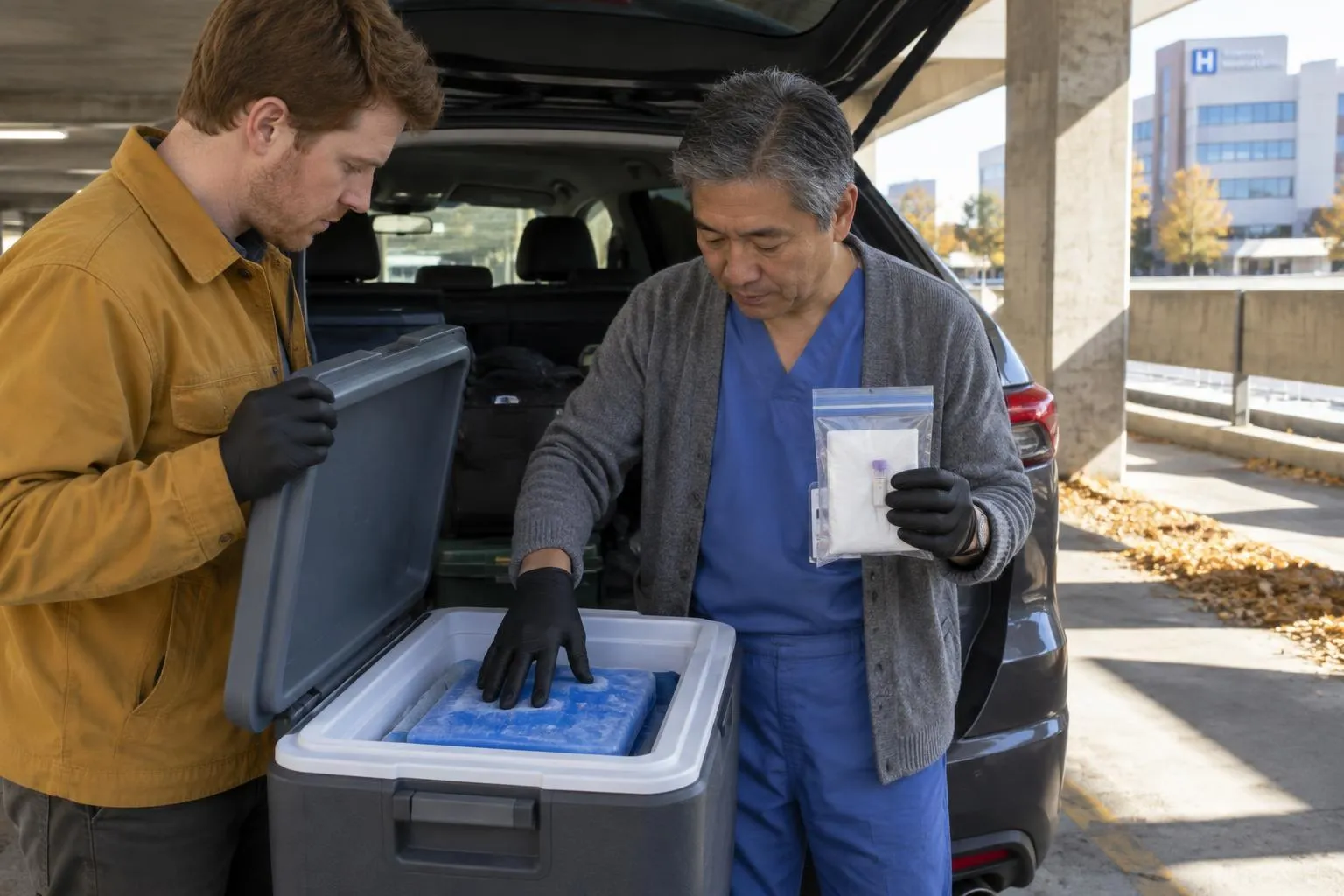
This is where couriers separate themselves fast. Blood cultures, frozen embryos, and ambient urinalysis samples each require entirely different handling — and a courier who treats them the same is a liability. Push for specifics: what equipment, what validated temperature ranges, what happens if a cold pack fails mid-route.
3. Walk me through your chain-of-custody documentation process.
CAP and CLIA audits will scrutinize your chain-of-custody records. Your courier’s documentation needs to be airtight from pickup to handoff. A strong answer describes exactly what gets logged, when, and how it’s matched to each specimen — not a vague reference to “paperwork.”
4. How do you verify recipient identity at drop-off?
Handing a specimen to the wrong person isn’t just an embarrassment — it’s a HIPAA event. Ask how couriers confirm they’re delivering to the right individual at the right location. The answer should include a documented verification step, not “we’ve never had a problem.”
5. What is your HIPAA compliance training protocol for drivers?
HIPAA covers more than electronic records — it governs how protected health information is handled physically, including specimen labels. Ask how often drivers are trained, who administers it, and whether there are written policies. Blank looks here are a disqualifying answer.
Reality Check:“We’re HIPAA compliant” is a marketing phrase. “Here’s our training schedule, our written policy, and our incident response procedure” is actual compliance. Don’t accept the former as evidence of the latter.
6. Are you registered with DOT/PHMSA for hazardous materials transport, and do you follow IATA standards for UN 3373 Category B biological substances?
For anything beyond the most routine specimens, federal hazmat regulations apply. This is a factual yes/no with documentation — a legitimate courier knows exactly what this question means. If they seem unfamiliar with UN 3373, end the call.
7. What’s your on-time delivery rate, and how do you measure it?
Reliability claims are worthless without a measurement system behind them. Ask how they define “on-time,” how they track it, and whether they can share data. A provider confident in their record will have numbers. One who gets vague is telling you something.
8. What’s your contingency plan when a driver is unavailable or a vehicle breaks down?
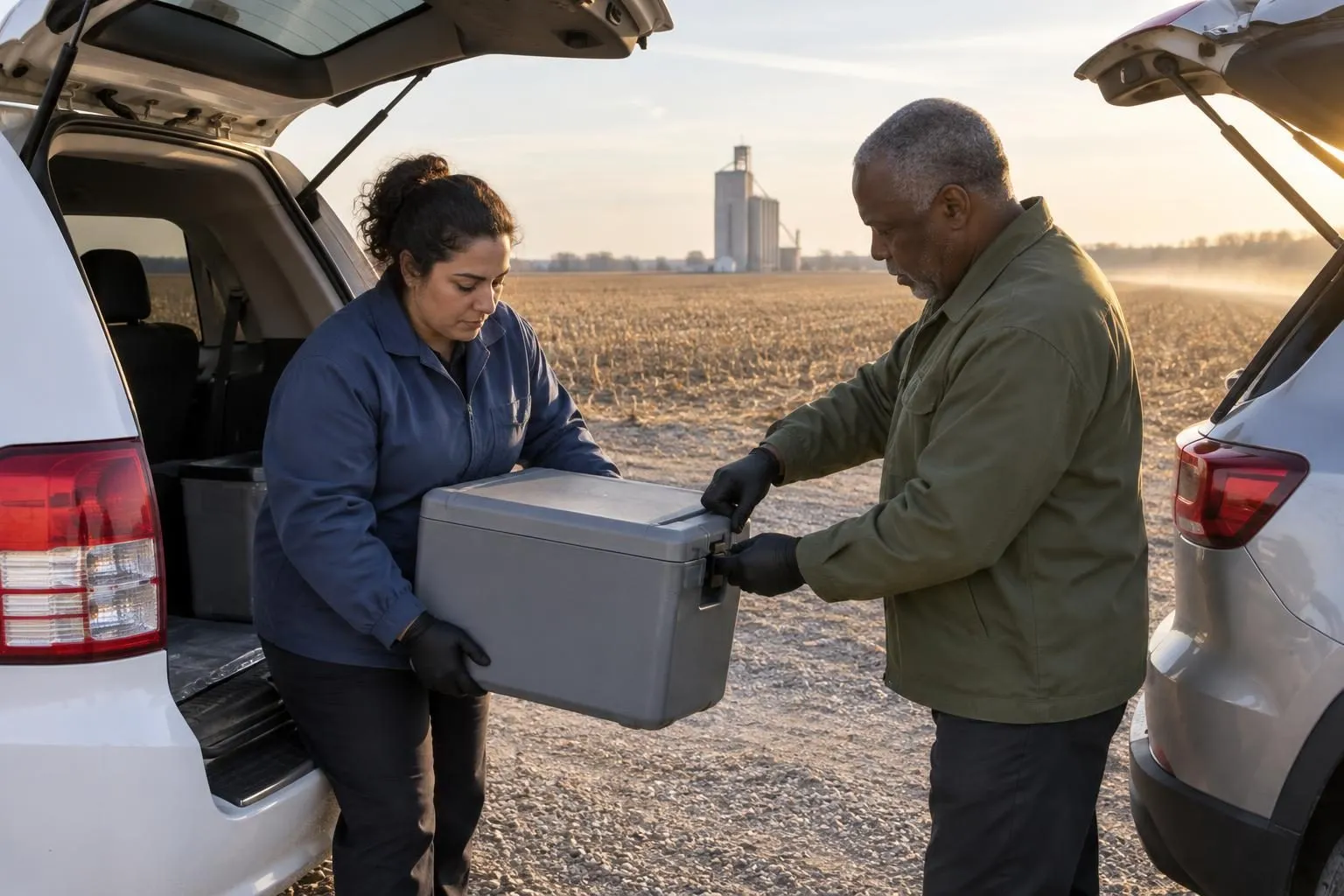
This question is a stress test. Every courier will tell you they’re reliable — what matters is what they’ve built for the moments when reliability is hardest. You want a specific answer: backup driver pool, partner network, escalation contacts, and maximum response time.
Pro Tip:Ask this one as a scenario. “It’s 5:30 AM on a Tuesday. Your assigned driver calls out sick. What happens to my STAT pickup?” The specificity of their answer tells you everything about how operationalized their contingency planning actually is.
9. Do you offer real-time tracking and status updates?
Your lab staff shouldn’t be calling a dispatcher to find out where a critical specimen is. Modern medical couriers provide digital tracking with timestamps. If their answer is “you can always call us,” that’s a workflow problem waiting to happen.
10. How do you handle a spill, leak, or packaging failure in transit?
Biological specimens require specific spill response — it’s an OSHA and safety protocol issue, not just a cleanup inconvenience. Ask for their written procedure. A trained team has one memorized. An undertrained team will improvise, and that’s when exposure incidents happen.
11. Can you handle STAT and after-hours emergency pickups?
Routine daily routes are the easy part. The harder test is whether a courier can execute a same-day STAT pickup from a remote clinic at 9 PM. Ask for their after-hours process and how quickly they can mobilize. For hospital networks, this isn’t optional — it’s table stakes.
12. What’s your process for handling frozen specimens like sperm, eggs, or embryos?
These are among the most irreplaceable materials a courier will ever transport. If your practice handles reproductive medicine or oncofertility, push hard on equipment validation, temperature logging intervals, and what happens if cryogenic storage is compromised in transit.
| Specimen Type | Key Handling Concern | Minimum Acceptable Answer |
|---|---|---|
| Blood cultures | Temperature window, time sensitivity | Validated cool-pack protocol, pickup-to-lab SLA |
| Frozen embryos/sperm | Cryogenic integrity | Logged liquid nitrogen or dry shipper, trained handler |
| Tissue biopsies | Fixation medium stability | Ambient or refrigerated per lab spec, documented |
| Urine/ambient specimens | Basic containment | Leak-proof secondary container, ambient range confirmed |
| Organs | Cold ischemia time | Dedicated route, direct contact protocol, zero handoffs |
13. How long have your drivers been handling medical specimens, and what does your background check process look like?
Experience with sensitive materials and clean background records are baseline requirements. Ask for average tenure on the medical courier team and what the screening process covers. High turnover in this role is a structural problem, not just a staffing detail.
14. What does your billing and payment process look like, and how do you handle disputes?
This one sounds administrative, but payment reliability is a signal of operational maturity. A company that struggles with billing accuracy often struggles with route accuracy. Ask how invoices are structured and how disputes get resolved — you want a clean process, not a fight every month.
15. Can you provide references from labs or hospital systems similar to ours?
Everything above can be said in an interview. References confirm it in the real world. Ask specifically for clients who use them for daily routes and STAT pickups — those are two different operational demands, and you need confidence in both.
Reality Check:A courier who hesitates on references or offers only one is showing you their hand. A courier with a strong track record will have multiple contacts ready and won’t need to ask for time to “check if they’re okay with being called.”
Practical Bottom Line
Run these 15 questions as a structured intake, not a casual conversation. Take notes. If a courier can’t answer questions 1–6 with documentation, don’t move forward — compliance isn’t negotiable in a chain-of-custody environment.
For questions 7–11, you’re measuring operational maturity. Good answers are specific and built around systems, not reassurances. For questions 12–15, you’re calibrating fit to your specific volume and specimen mix.
The couriers worth hiring will treat this conversation as a qualification exercise, not a sales call. They’ll ask you questions too — about your pickup locations, your specimen types, your STAT frequency. That’s the tell.
Start with the complete guide to medical specimen couriers if you’re still mapping the landscape before you get to the vetting stage. Once you’ve run this checklist, use your local search to find vetted providers in your area and cross-reference their answers against what you’ve learned here.
The labs that get burned on courier relationships are almost always the ones who skipped the hard questions upfront. You now have all 15.
Done reading? Get quotes from medical specimen couriers near you.
Takes about a minute. Free, no obligation; providers reply to you directly.
Popular cities:
Nick built this directory to help lab managers and hospital procurement teams find credentialed specimen couriers without relying on word-of-mouth — a gap he discovered after a reference lab lost a critical oncology biopsy due to an uncertified transport vendor with no documented chain of custody.